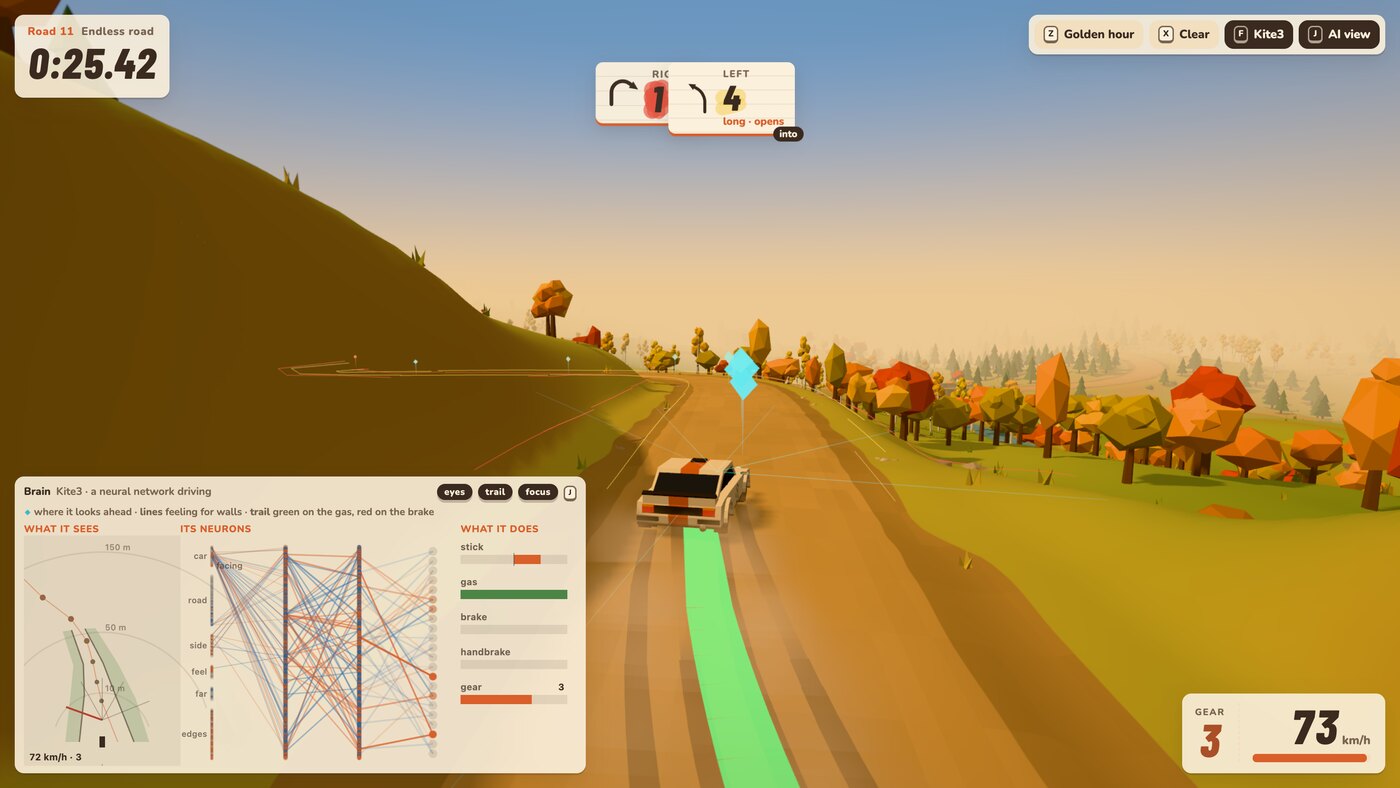
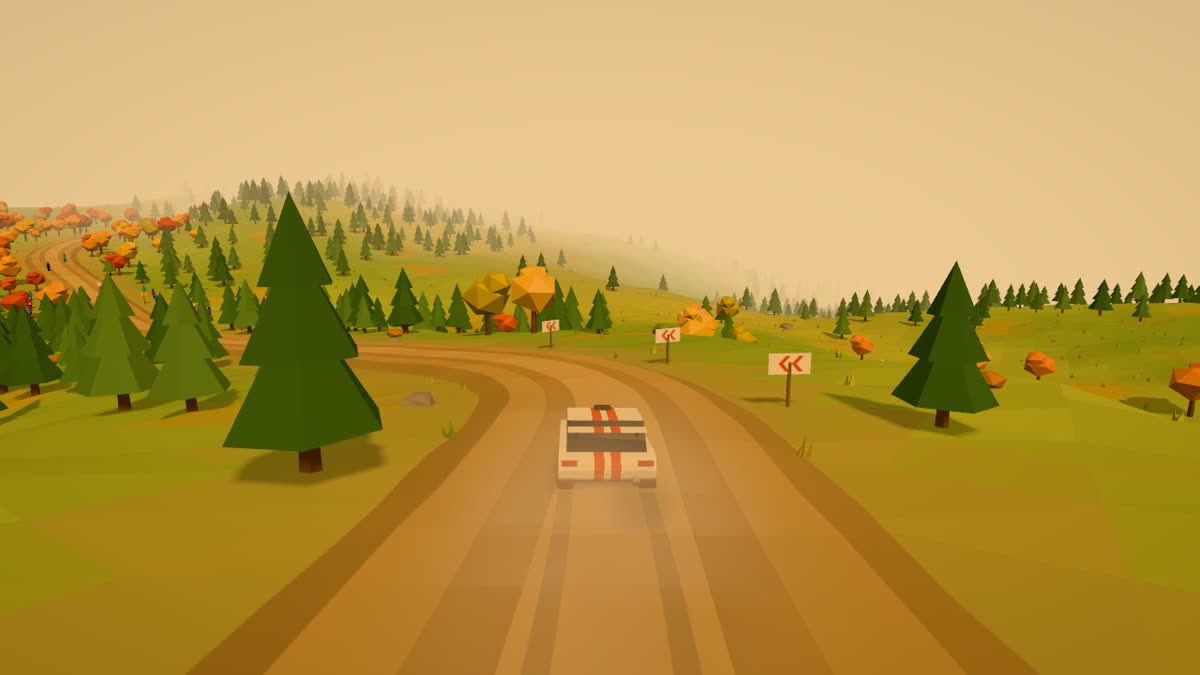
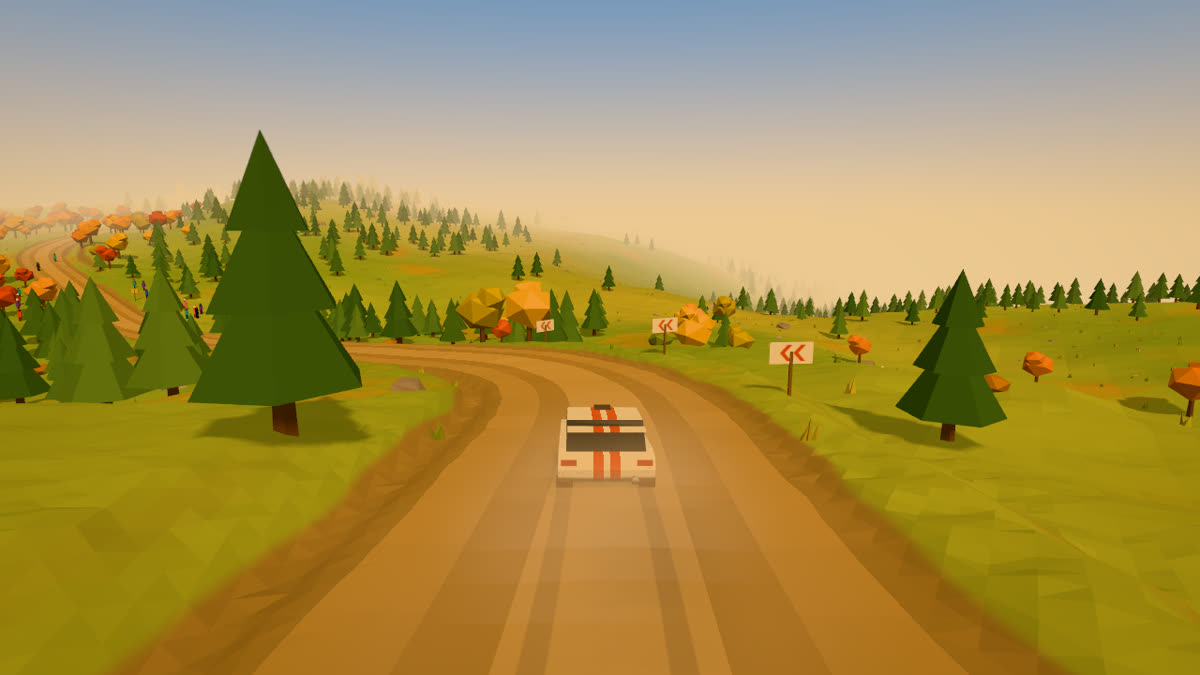
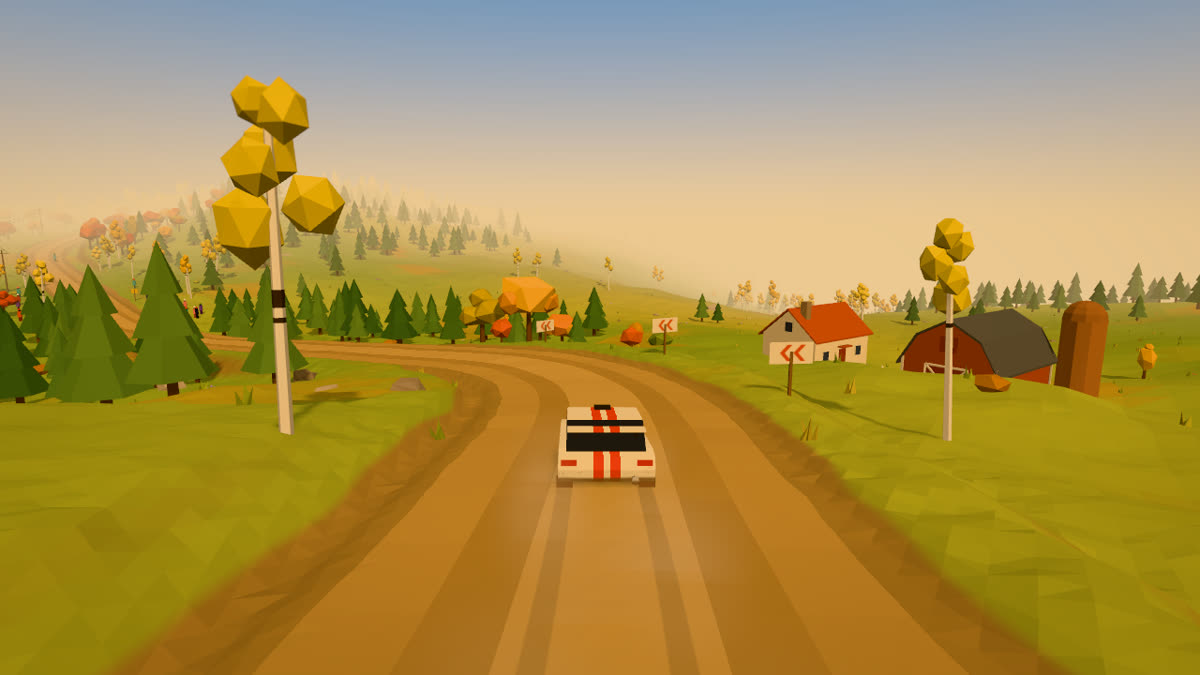
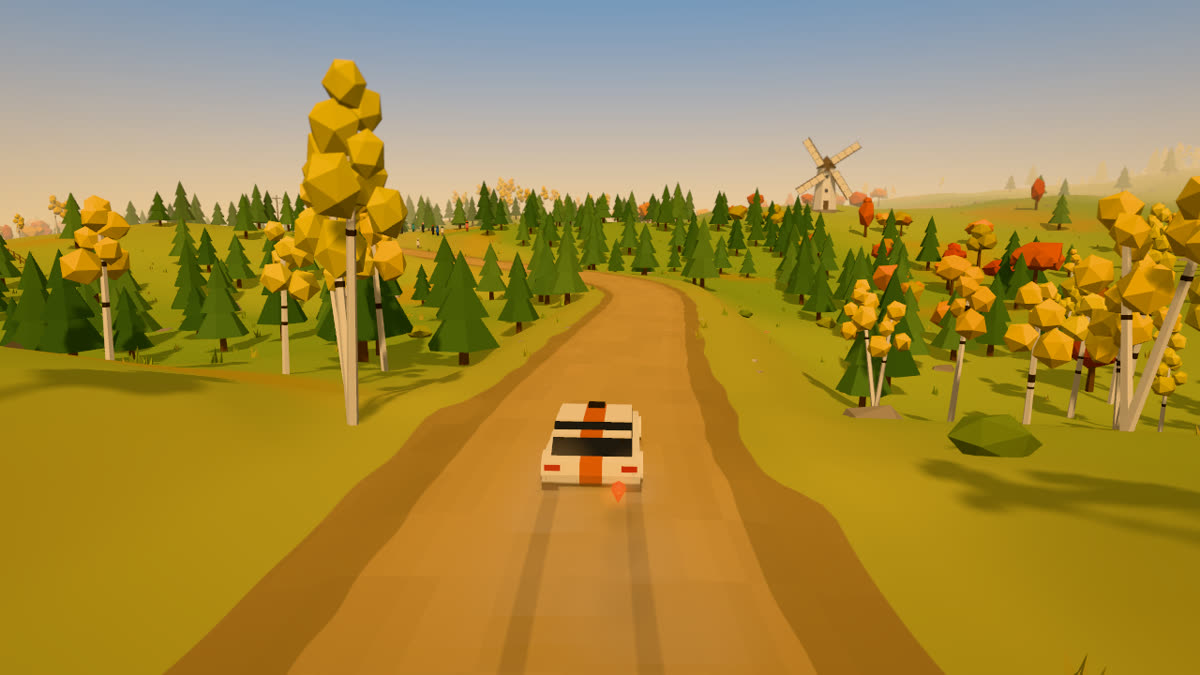
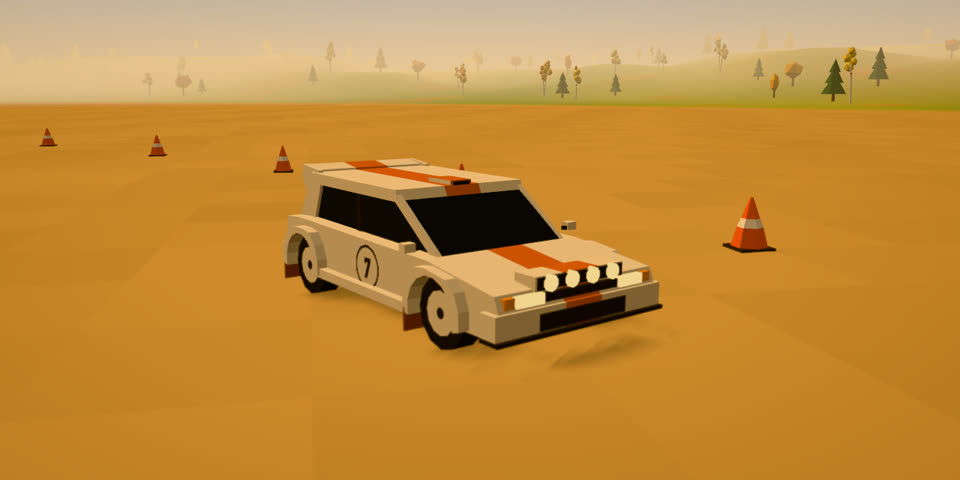
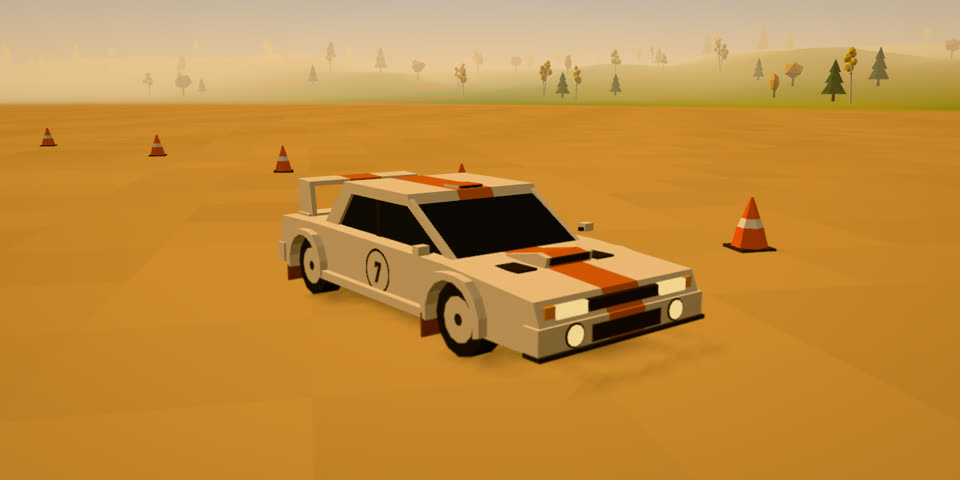
No assists. No invented forces.
Drift comes from the throttle spinning the rear wheels. Lift off and the slide relaxes, because that is what the tyres do.
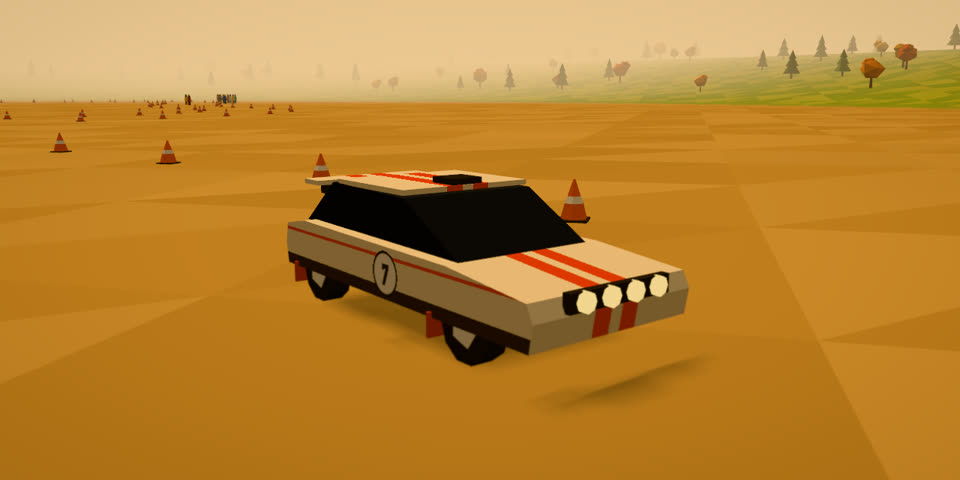
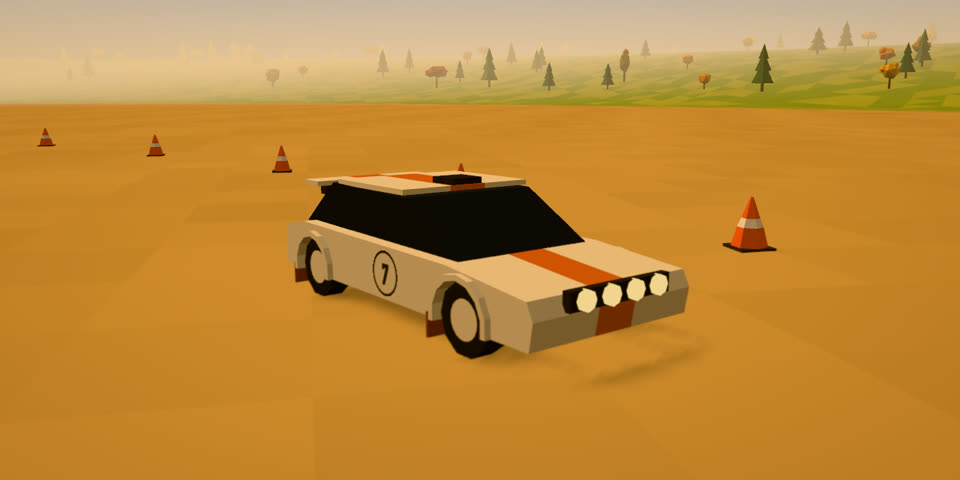
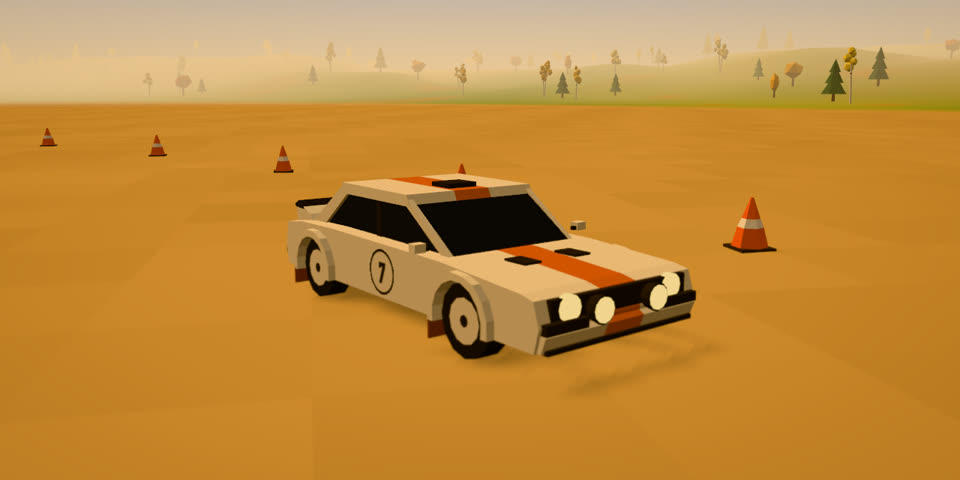
The car is a full rigid body on four simulated springs and dampers, with tyres that lose grip as they slide, load up as weight shifts, and plough a bank of gravel when dragged sideways so big drifts scrub speed instead of spinning out. It runs 240 times a second. There are three cars—the rear-drive Classic G4, the featherweight front-drive Kit 1600 with a helical limited-slip diff, and the four-wheel-drive Turbo 95—each with its own body, differential and gearing.
There are no audio files anywhere in the game either. Every engine note is two harmonically locked oscillators swept through fixed exhaust and intake formants in Web Audio, with an ignition-cut rev limiter, overrun exhaust pops, turbo flutter on the Turbo 95, filtered-noise gravel and wind, and a 16-step chiptune soundtrack that ducks for pace notes.
The hard part was the keyboard. You drive with W, A, S and D (or the arrows), and a key is either on or off, which on a real car means full lock at 120 km/h. So all the help lives in how a key is read, never in the physics: steering gets slower as speed rises, relaxed hands let the wheel self-centre the way a real one does, and holding a key into a slide is read as countersteer.
I tuned the feel with a tool I built into the game. It gives me two cars that differ in one way. I swap between them mid-corner and pick the one I prefer, and after a dozen rounds it has found my taste on eight dials: grip, tail, power, steering, turning, weight, hands and suspension.
In my tuning tool:1 2 swap cars mid-cornerEnter keep the one I like